
This slow-roasted leg of lamb is garlicky, rosemary-bright and fall-apart tender—the fat-cap scored and rubbed, the roast resting on halved onions and a head of garlic so juices collect in the pan for a glossy, savory gravy.
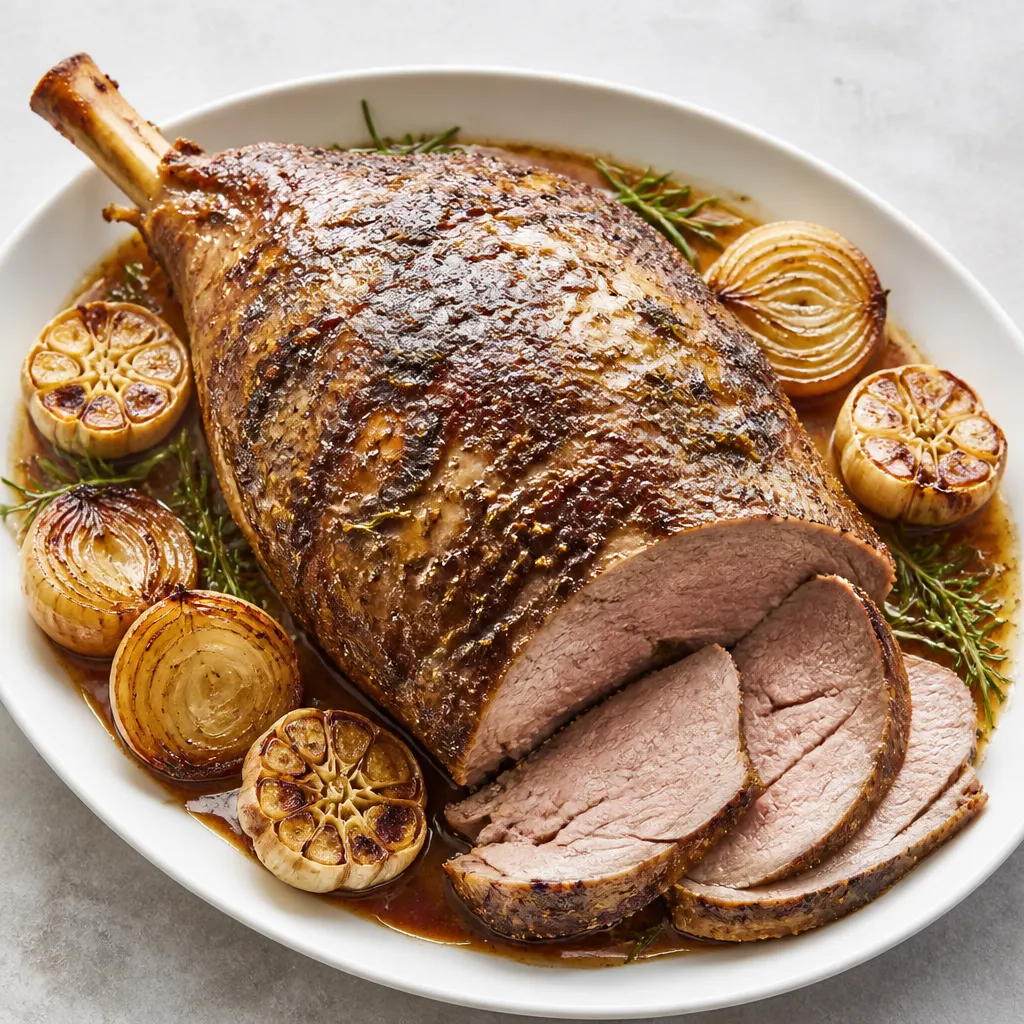
It takes about 3 hours in the oven plus a 60-minute bring-to-room-temperature step, and it’s ideal for entertaining: prep the rub ahead, roast low-and-slow, then finish with a quick roux-based gravy. For a complementary side, try the Wild Rice Salad with Roasted Vegetables and Lemon-Tahini Dressing (https://yourmomscooking.com/wild-rice-salad-with-roasted-vegetables-and-lemon-tahini-dressing/).
Why You’ll Love This Recipe
Low-and-slow roasting turns a bone-in leg into pull-from-bone tender meat while the scored fat cap and wet rub build deep flavor; the pan juices become the foundation for a simple, restaurant-style gravy.
This roast scales easily for a crowd (Servings: 8 -12 people) and the pan-juice gravy gives you a rich, show-stopping finish without extra fuss.
Ingredients You’ll Need
How to Roast the Lamb
- Remove the lamb from its packaging and place it on a cutting board. Pat the entire roast completely dry with paper towels.
- Let the lamb sit at room temperature for 60 minutes while you trim, score, prep the pan, and make the wet rub.
- Trim excess fat so the fat cap is about 1/8-inch thick. Score the lamb on both sides in a crosshatch/checkerboard pattern with cuts about 1-inch apart and 1/4–1/2-inch deep.
- Preheat the oven to 325 degrees F. Place the halved yellow onions and the halved head of garlic, cut side up, in the center of a large roasting pan.
- Make the wet rub by combining the minced garlic, olive oil, kosher salt, Dijon mustard, pure maple syrup (or brown sugar), lemon zest, minced fresh rosemary, chili powder, paprika, pepper, dried thyme, dried oregano, and onion powder.
- While the lamb is still on the cutting board, rub half of the wet rub into the fat-cap side, massaging it into the scoring. Do not rub the other side yet.
- Place the lamb, seasoned side down, in the roasting pan so it is propped up on the garlic and onions. Use your hands to rub the remaining wet rub all over the rest of the lamb.
- Pour the 4 cups reduced sodium beef broth and 2 cups water around the lamb in the pan, taking care not to wash the seasoning off the meat. Cover the pan tightly with aluminum foil.
- Bake at 325 degrees F for 3 hours. After 3 hours, check with tongs to see if the meat easily pulls from the bone; if not, continue roasting until the lamb is tender and pulls away with tongs.
- Remove the lamb from the oven and generously spoon pan juices over the roast. Transfer the lamb to a serving platter and cover loosely with foil while you make the gravy.
- Remove the onions and garlic from the roasting pan and pour the pan juices into a gravy fat separator cup; skim off the fat as you pour.
- If you don’t have a fat separator, pour the pan juices into a large freezer bag, let the fat rise to the top, then cut a small corner of the bag over a 3+ cup liquid measuring cup to drain the de-fatted juices from the bottom.
- Add the de-fatted pan juices to a 3+ cup liquid measuring cup and add additional reduced sodium beef broth only if needed to equal 2 1/2 cups of liquid; set this aside.
- Melt the 5 tablespoons unsalted butter in a large saucepan over medium heat. Add the 1/3 cup flour and cook, whisking constantly, for 2 minutes to make a roux.
- Reduce heat to low and slowly whisk in the 2 1/2 cups of pan juices/broth. Bring to a simmer, whisking constantly, until the gravy thickens to the desired consistency. If it becomes too thick, whisk in additional broth.
- Taste the gravy and season with salt and pepper to taste. The recipe suggests starting with beef bouillon, 1/4 teaspoon at a time, before adding more salt.
- Use tongs to remove the meat from the bone and spoon the prepared gravy over the sliced or pulled lamb before serving.
Score and Trim Tips
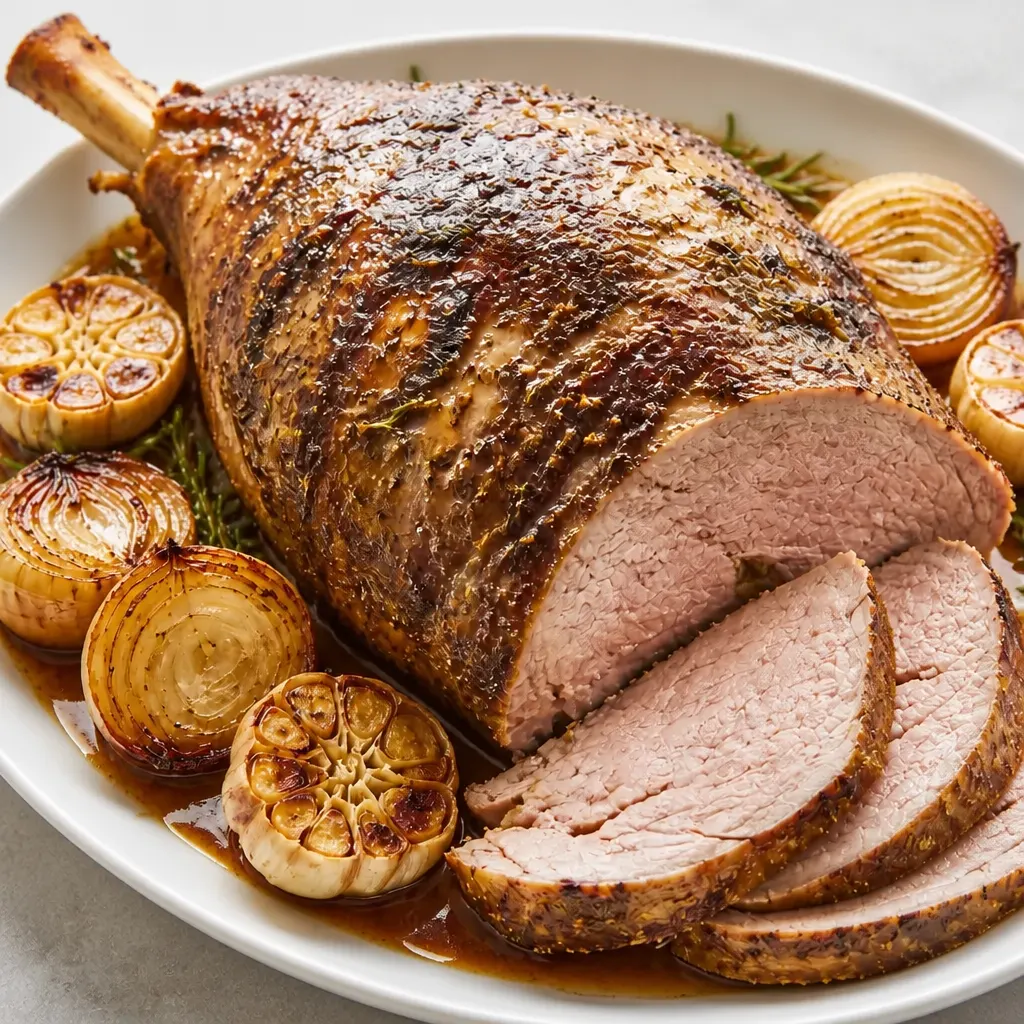
Proper trimming and scoring make a big difference: leave a thin fat cap (about 1/8-inch) to baste the meat as it roasts and score the fat in a crosshatch so the wet rub settles into the cuts for maximum flavor. For another related idea, try Easy Roasting Apples.
When you score, keep the cuts shallow—aim for 1/4–1/2-inch deep so the rub penetrates without cutting into the interior muscle.
- Trim fat cap to about 1/8-inch and remove any large hard pieces of fat.
- Score in a crosshatch with cuts about 1-inch apart.
- Massage half the wet rub into the fat-cap side first to season the scoring.
Pan-Juice Gravy Technique
The gravy is the roast’s best asset—separate the fat from the pan juices, bring the de-fatted juices to 2 1/2 cups total, then make a roux with 5 tablespoons butter and 1/3 cup flour before whisking in the juices to finish.
If you don’t own a fat separator, the freezer-bag method yields equally good results: let fat rise, then cut a small corner and drain the bottom liquid into a measuring cup.
- Skim fat with a gravy fat separator or use the freezer-bag spout method.
- Use 2 1/2 cups pan-juice/broth to start the gravy—add more if needed to loosen it.
- Cook the roux 2 minutes before adding liquid to avoid a raw-flour taste.
Prep-Ahead Instructions
This leg of lamb roast is ideal to prep ahead of time. Prepare the recipe through rubbing the wet rub all over the lamb. Loosely tent with foil for up to 24 hours. Remove the leg of lamb from the fridge 60 minutes before cooking and then proceed with the recipe.
Leftover leg of lamb roast can be stored in an airtight container in the fridge for up to 5 days or in the freezer for up to 3 months. To reheat:To microwave, reheat portions for 60 seconds, followed by 10-second intervals as needed. To reheat in the oven, transfer pulled lamb to foil and enclose with a splash of broth or water. Bake at 350ºF for 8-10 minutes or until warmed through. To reheat in a skillet, add pulled lamb to a skillet with a splash of water or broth. Cover and cook on low until warmed through, stirring occasionally.
- Rub the roast and tent with foil up to 24 hours ahead for easy party prep.
- Bring the roast to room temperature for 60 minutes before roasting for even cooking.
- Store leftovers in an airtight container for up to 5 days in the fridge or 3 months in the freezer.
Chef’s Tips
Bring to room temperature: Don’t skip the 60-minute step—bringing the roast to room temperature helps it cook evenly and reach pull-apart tenderness after 3 hours at 325 degrees F.
Scoring technique: Score only the fat cap to about 1/8-inch and cut 1-inch apart and 1/4–1/2-inch deep; this lets the rub and rendered fat flavor the meat without cutting into the roast too deeply.
Adjusting gravy thickness: If the gravy thickens too much, whisk in small amounts of broth; if it’s too thin, simmer gently until it reduces—use the 2 1/2 cups of pan juices/broth as your starting point.
Save This Recipe
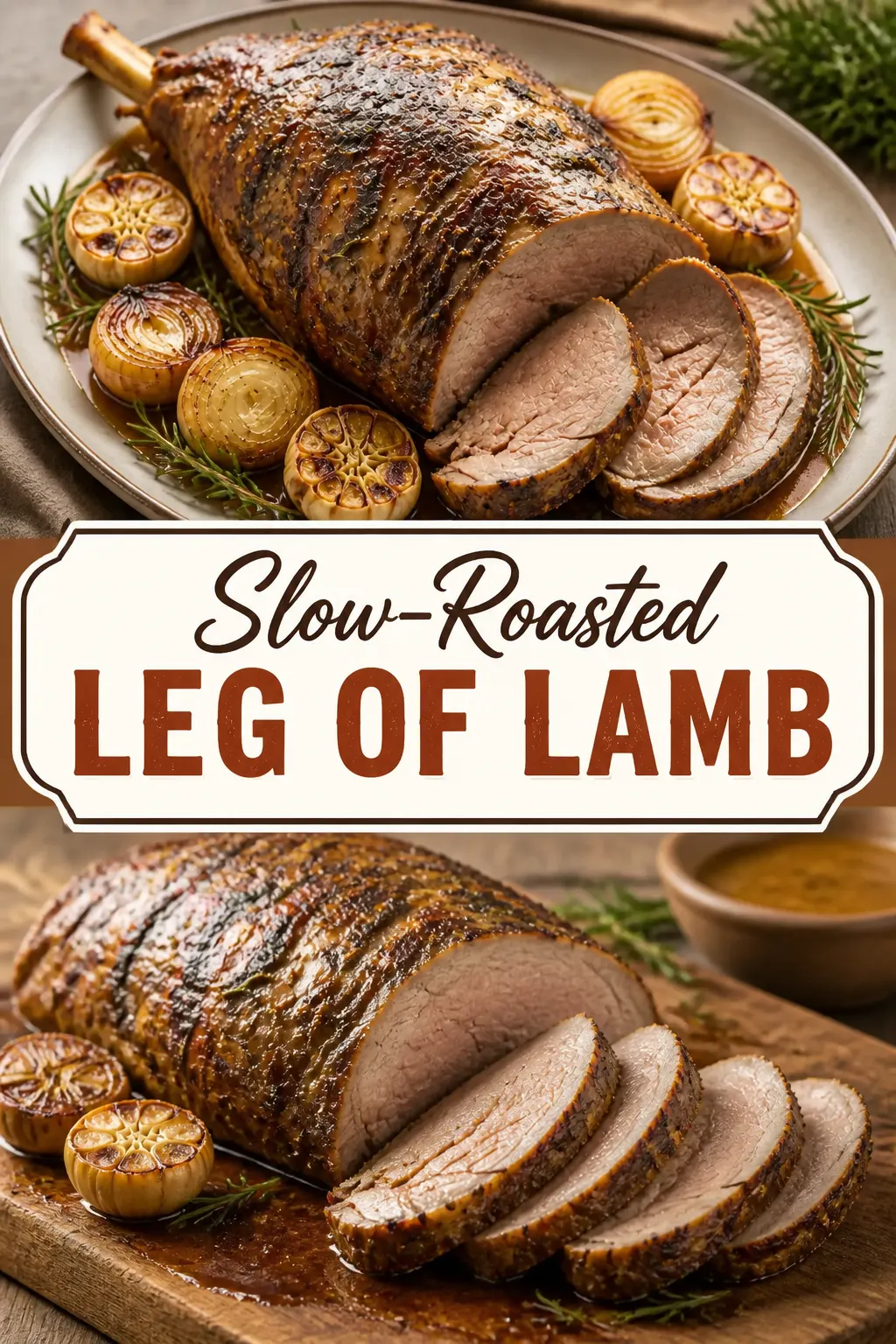
More recipes to serve with lamb
Frequently asked questions
Final notes
This roast rewards planning: rub and chill up to 24 hours ahead, roast low-and-slow for pull-apart results, and finish with the pan-juice gravy for maximum flavor.
Leftovers make excellent sandwiches, tacos, or plated reheated entrees—store and reheat as noted above to keep the meat moist.
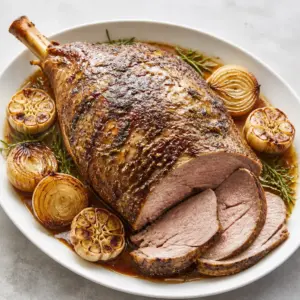
Roasted Leg Of Lamb
Equipment
- cutting board
- paper towels
- large roasting pan
- aluminum foil
- gravy fat separator
- large freezer bag
- 3+ cup liquid measuring cup
- large saucepan
- whisk
- tongs
Ingredients
- 5-7 lb. leg of lamb center cut roast bone-in
- 1 whole head garlic unpeeled, cut in half horizontally
- 2 yellow onions unpeeled, cut in half horizontally
- 4 cups reduced sodium beef broth
- 2 cups water
- 6 cloves garlic minced
- 2 tablespoons olive oil
- 1 1/2 tablespoons kosher salt
- 1 tablespoon Dijon mustard
- 1 tablespoon pure maple syrup may sub brown sugar
- 1 tablespoon lemon zest
- 1 tablespoon rosemary minced, fresh
- 1 1/2 teaspoons chili powder
- 1 tsp paprika, pepper each
- 1/2 tsp dried thyme, dried oregano, onion powder each
- 5 tablespoons unsalted butter
- 1/3 cup flour
- reduced sodium beef broth as needed (will use mostly pan juices)
Instructions
- Remove the lamb from its packaging and place it on a cutting board. Pat the entire roast completely dry with paper towels.
- Let the lamb sit at room temperature for 60 minutes while you trim, score, prep the pan, and make the wet rub.
- Trim excess fat so the fat cap is about 1/8-inch thick. Score the lamb on both sides in a crosshatch pattern with cuts about 1-inch apart and 1/4–1/2-inch deep.
- Preheat the oven to 325 degrees F. Place the halved yellow onions and the halved head of garlic, cut side up, in the center of a large roasting pan.
- Make the wet rub by combining the minced garlic, olive oil, kosher salt, Dijon mustard, pure maple syrup (or brown sugar), lemon zest, minced fresh rosemary, chili powder, paprika, pepper, dried thyme, dried oregano, and onion powder.
- While the lamb is still on the cutting board, rub half of the wet rub into the fat-cap side, massaging it into the scoring. Do not rub the other side yet.
- Place the lamb, seasoned side down, in the roasting pan so it is propped up on the garlic and onions. Use your hands to rub the remaining wet rub all over the lamb.
- Pour the 4 cups reduced sodium beef broth and 2 cups water (or specified liquid) around the lamb in the pan, then cover the pan tightly with foil.
- Bake at 325 degrees F for 3 hours. After 3 hours, check with tongs to see if the meat easily pulls from the bone; if not, continue roasting until the lamb is tender.
- Remove the lamb from the oven and generous spoon pan juices over the roast. Transfer the lamb to a serving platter and cover loosely with foil while you make the gravy.
- Remove the onions and garlic from the pan juices. Pour the pan juices into a gravy fat separator cup and skim off the fat as you pour.
- If you don’t have a fat separator, pour the pan juices into a large freezer bag, let the fat rise to the top, then cut a small corner of the bag over a 3+ cup liquid measuring cup to drain the de-fatted juices from the bottom.
- Add the de-fatted pan juices to a 3+ cup liquid measuring cup and add additional reduced sodium beef broth only if needed to equal 2 1/2 cups of liquid; set this aside.
- Melt the unsalted butter in a large saucepan over medium heat. Add the flour and cook, whisking constantly, for 2 minutes to make a roux.
- Reduce heat to low and slowly whisk in the 2 1/2 cups of pan juices/broth. Bring to a simmer, whisking constantly, until the gravy thickens to the desired consistency. If it becomes too thick, whisk in additional broth.
- Taste the gravy and season with salt and pepper to taste. The recipe suggests starting with beef bouillon, 1/4 teaspoon at a time, before adding more salt.
- Remove the meat from the bone with tongs and top with the prepared gravy.