
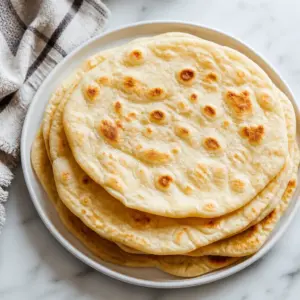
These no-yeast flatbreads are tender, slightly rich, and pliable — thanks to butter and milk — with light golden spots and little puffs where steam lifts the layers.
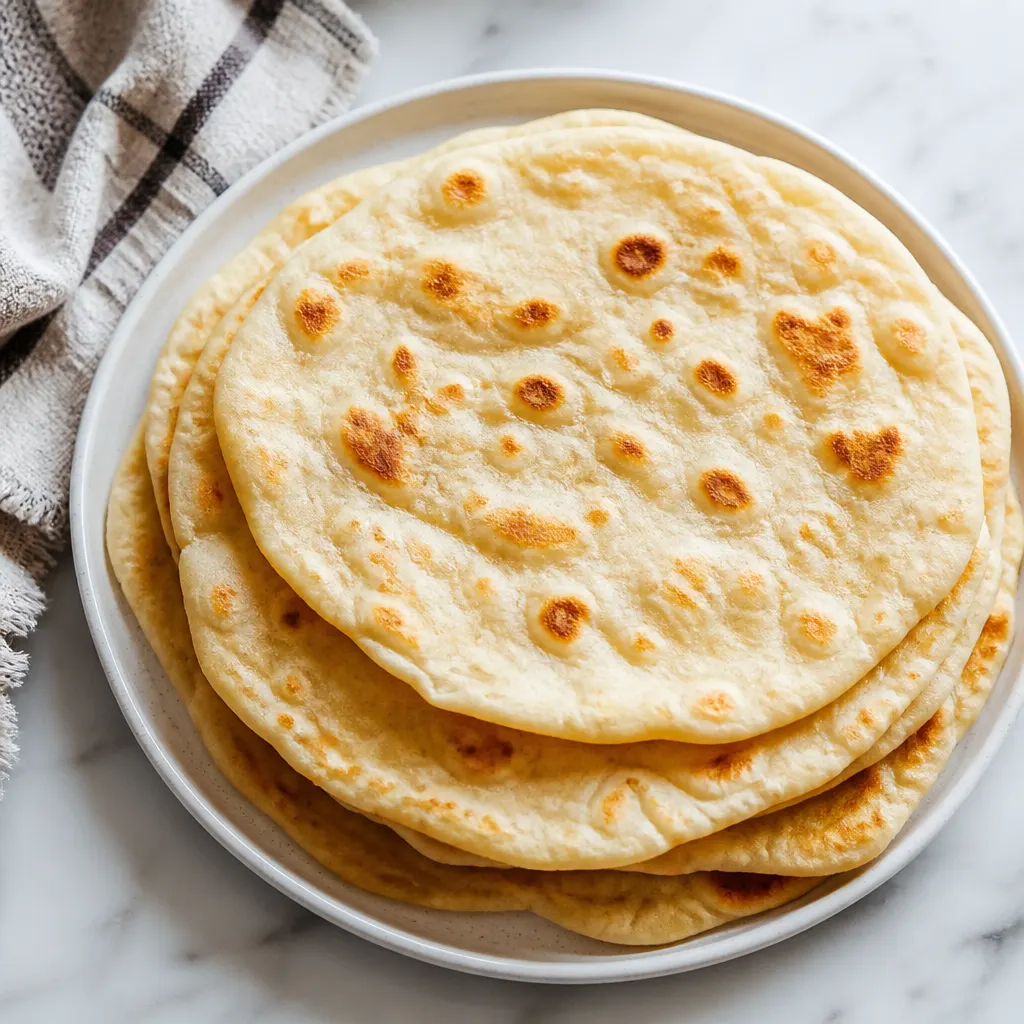
They come together quickly (total time about 26 minutes) and make a perfect base for wraps, dipping, or serving alongside a curry — roll them thin for wraps or a touch thicker for dipping.
Why You’ll Love This Recipe
A short, reliable stovetop flatbread that uses pantry staples and no yeast, delivering soft, flexible breads you can make any night of the week.
Because the dough rests only 30–45 minutes and cooks quickly on the stovetop, this recipe is a fast way to get fresh flatbreads without yeast or long rising times.
Ingredients You’ll Need
How to Make No-Yeast Flatbread
- Add the 4 cups plain all-purpose flour, 1 teaspoon salt, and a pinch of baking powder to a mixing bowl. Stir briefly to combine so the leavening and salt are evenly distributed.
- Add the 7 tablespoons butter and 1½ cups milk to a small saucepan or microwave-safe jug. Gently heat until the butter is just melted; do not boil. The mixture should be warm, not scalding.
- Pour the warm butter–milk mixture into the dry ingredients and stir until the mixture starts to come together into a dough. Use a spoon first, then your hands as it firms up.
- Dust your work surface with a little flour and knead the dough for 2-3 minutes, just until it feels smooth and soft. The dough should be slightly tacky but manageable — avoid adding lots of extra flour.
- Wrap the dough ball in plastic wrap or cover with a clean towel and let it rest at room temperature for 30-45 minutes. Resting relaxes the gluten and makes rolling much easier.
- After resting, cut the dough into 8 equal pieces and roll each piece into a ball. Lightly flour the work surface and roll each ball out into a round about 2-3mm thick for wraps; adjust thickness if you want thicker flatbreads for dipping.
- Place a non-stick frying pan over high heat. Add 1 teaspoon oil if you want to cook them with oil; otherwise leave the pan dry for lighter breads.
- Let the pan get hot before you start cooking; if you used oil, reduce the heat slightly so the oil doesn’t smoke. A properly heated pan helps the breads puff and develop golden spots quickly.
- Place one dough round in the hot pan; it should start to puff as it cooks. Cook for about 1 minute until you see light brown spots and the underside has color, then flip and cook the other side for 45 seconds to 1 minute until cooked through.
- As each flatbread finishes cooking, stack them on a plate and wrap them in a clean tea towel to keep them warm and soft while you cook the rest. This preserves steam and keeps the flatbreads pliable.
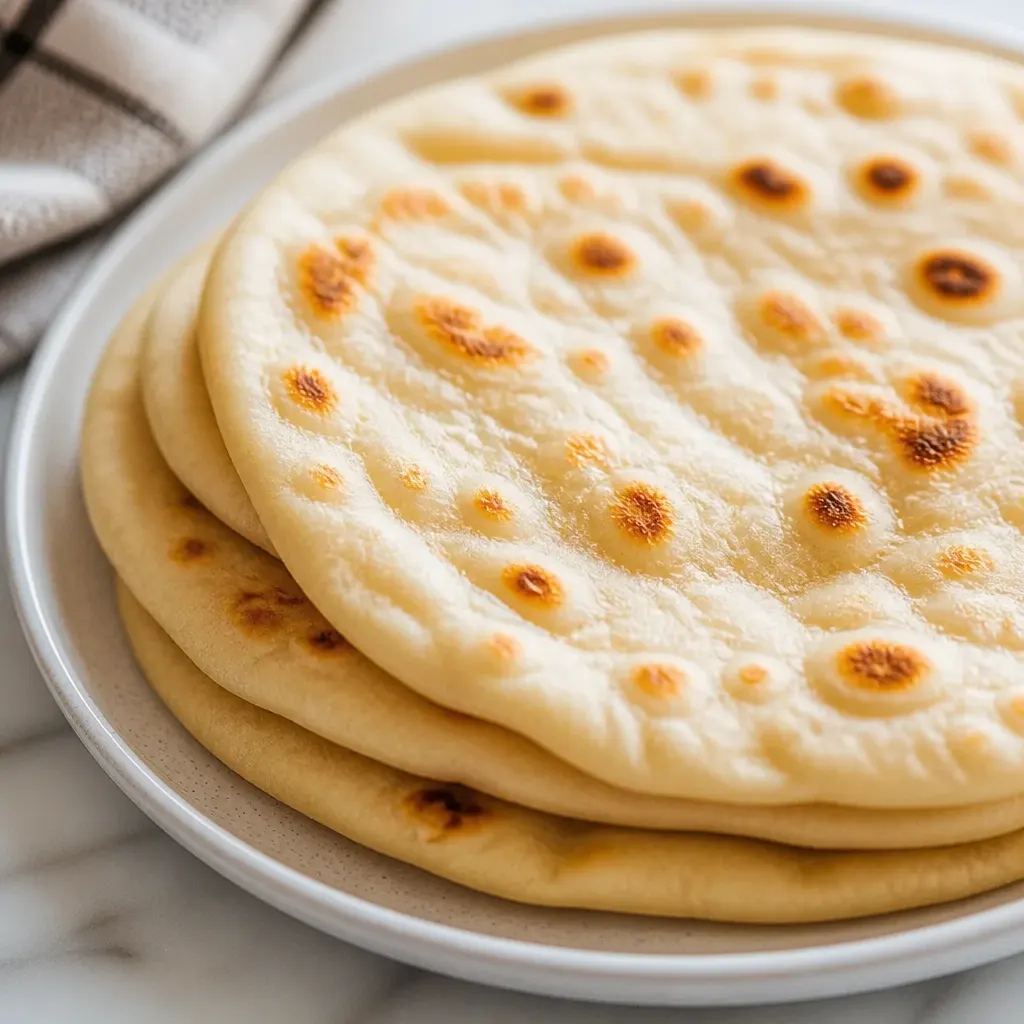
Dough Softness Guide
How the dough feels is the best guide: aim for a smooth, soft ball that’s only slightly tacky to the touch. Knead 2-3 minutes — just long enough to make the surface smooth, not to develop a strong gluten network like yeast breads.
If the dough feels very sticky, press a light dusting of flour onto your hands and the work surface rather than dumping extra flour into the dough.
- Smooth and soft after 2-3 minutes of kneading = correct consistency.
- Slight tackiness is fine; heavy stickiness = add flour very sparingly.
- Over-kneading or too much flour = tighter, tougher flatbreads.
Thickness for Dips vs Wraps
Thickness determines use: roll to about 2-3mm for flexible wraps that fold without cracking. For dipping, leave them a bit thicker and cook longer so they stay substantial and don’t tear — and for a delicious dip pairing try the Zucchini Hummus (Paleo) Recipe.
- Wraps: ~2–3mm thick; cook ~1 minute first side, 45 seconds to 1 minute second side.
- Dipping: 3–4mm thick; increase cooking time by about 20–40 seconds per side until cooked through and slightly browned.
- Very thick (for scooping stews/curries): roll thicker and finish with a little oil or butter in the pan for a crisp edge.
Pan Temperature & Timing
A properly hot pan produces steam that puffs the flatbread and creates light brown spots. High heat on a non-stick pan is recommended; if you add oil, drop to medium-high so it doesn’t smoke.
Watch for visible cues: the dough should puff in places, the underside should show golden-brown spots, and the second side should set quickly—avoid long, slow cooking which dries the bread and makes it prone to cracking when folded.
- Preheat pan until very hot before adding dough.
- Cook first side ~1 minute, second side ~45 seconds to 1 minute for 2–3mm thickness.
- Lower heat slightly if using oil to prevent burning, but aim for quick color development rather than slow drying.
Tips for Success
Keep the dough soft: Only add a dusting of extra flour if the dough is unmanageably sticky. A soft, slightly tacky dough yields the most tender flatbreads; too much flour makes them tough.
Watch your heat: Use a hot pan so breads puff and color quickly. If you’re cooking with 1 teaspoon oil, lower the heat slightly to avoid burning the oil while still getting good color.
Thickness matters: Roll to about 2-3mm for wraps (quick cook). For dipping, make them thicker — see the Thickness for Dips vs Wraps section for cook-time ranges.
Keep them soft after cooking: Stack fresh breads and wrap in a clean tea towel or store in an airtight container; the trapped steam keeps them flexible.
Save This Recipe
More recipes to try
Common questions
Final notes
These no-yeast flatbreads are forgiving and versatile — once you get the feel for dough softness and pan heat, you’ll make them again and again.
Keep extras wrapped in a towel or sealed container and reheat in a hot skillet for a minute per side to refresh their pliability.
No Yeast Flatbread
Equipment
- mixing bowl
- small saucepan or microwave-safe jug
- non-stick frying pan
- plastic wrap or clean towel
Ingredients
- 4 cups plain all-purpose flour Note 1
- 1 teaspoon salt
- pinch baking powder
- 11/2 cups milk Note 2
- 7 tablespoons butter Note 3
- 1 teaspoon oil Note 6
Instructions
- Add the 4 cups plain all-purpose flour, 1 teaspoon salt, and a pinch of baking powder to a mixing bowl.
- Add the 7 tablespoons butter and 1½ cups milk to a small saucepan or microwave-safe jug. Gently heat until the butter is just melted; do not boil.
- Pour the warm butter–milk mixture into the dry ingredients and stir until the mixture starts to come together into a dough.
- Dust your work surface with a little flour and knead the dough for 2-3 minutes, just until it feels smooth and soft. If the dough is too sticky, add a touch more flour as needed.
- Wrap the dough ball in plastic wrap or cover with a clean towel and let it rest at room temperature for 30-45 minutes to relax the gluten and make it easier to roll out.
- After resting, cut the dough into 8 equal pieces and roll each piece into a ball. Lightly flour the work surface and roll each ball out into a round about 2-3mm thick.
- Place a non-stick frying pan over high heat. Add 1 teaspoon oil if you want to cook them with oil.
- Let the pan get hot before you start cooking; use a slightly lower heat if you are cooking with oil.
- Place one dough round in the hot pan; it should start to puff as it cooks. Cook for about 1 minute, then flip and cook the other side for 45 seconds to 1 minute.
- As each flatbread finishes cooking, stack them on a plate and wrap them in a clean tea towel to keep them warm and soft while you cook the rest.