
Tall, tender cake layers baked from cake flour combine with a silky, super‑fluffy vanilla buttercream for a classic celebration cake — fine crumb, soft crumb structure, and a clean vanilla flavor throughout.
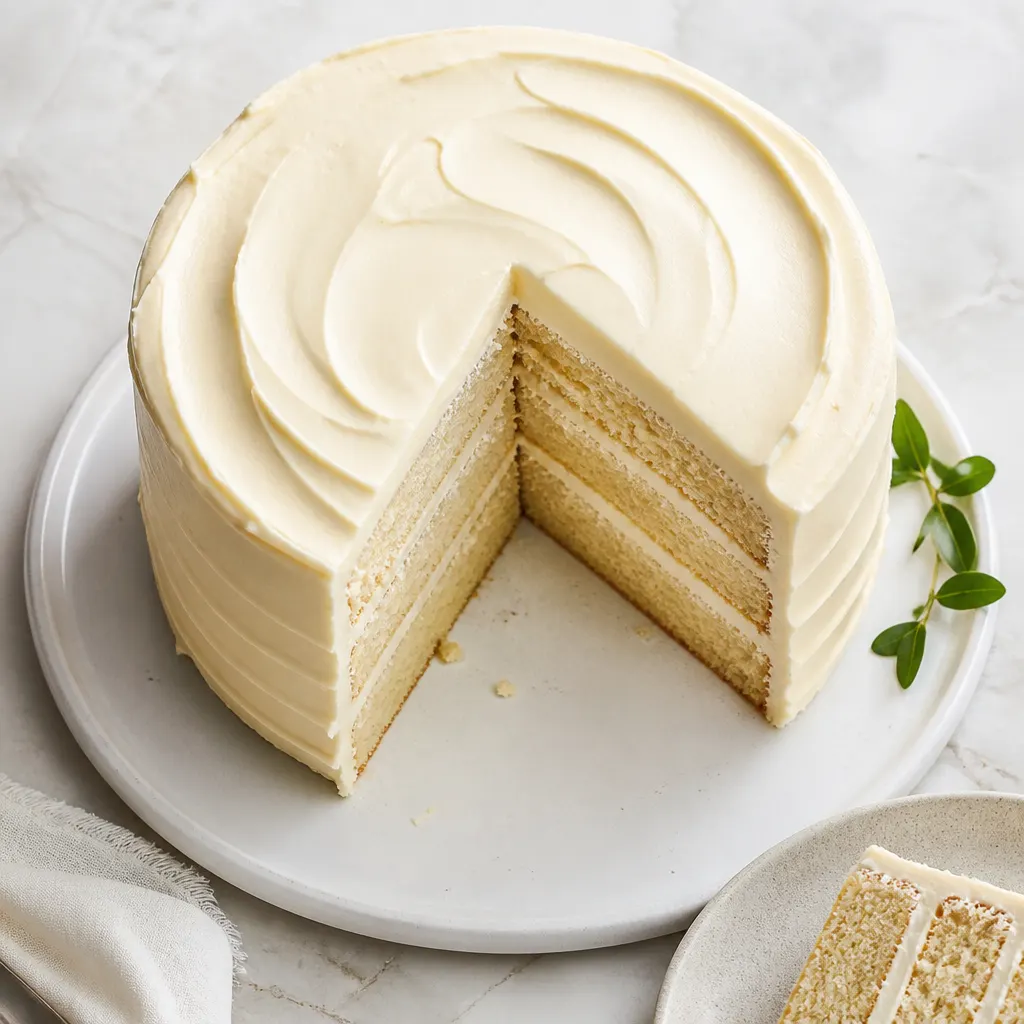
Ready in about 60 minutes total, this three‑layer 9″ cake is built for birthdays and holidays; slice it after the frosting sets so each piece keeps its shape, and for another elegant vanilla dessert idea try Vanilla Bean Cheesecake Shooters.
Why You’ll Love This Recipe
A technique‑forward vanilla layer cake that prioritizes a tender crumb, even layers, and a pillow‑light frosting so every slice is tall, stable, and moist.
This recipe pairs reliable technique with forgiving assembly steps so you can confidently bake, stack, and decorate a tall vanilla layer cake that looks as good as it tastes.
Ingredients You’ll Need
How to Make the Cake
- Preheat the oven to 350 degrees (F). Generously grease the bottom and sides of three 9‑inch round cake pans and line each with a parchment round; set pans aside so they’re ready when batter is mixed.
- Whisk together the cake flour, baking powder, baking soda, and salt in a large mixing bowl and set the dry mixture aside so it’s ready for the alternating additions.
- In a stand mixer fitted with the paddle attachment (or with a handheld mixer), beat the butter on medium speed until smooth and creamy, about 1 minute. Gradually add the granulated sugar, then beat on medium‑high for 2 minutes to incorporate air for a lighter crumb. Beat in the vanilla and almond extracts.
- Reduce the mixer speed to medium‑low and add the eggs one at a time, beating well after each addition and scraping down the bowl frequently so the batter stays smooth and uniform.
- Beat in the frothy egg whites in three additions, mixing well after each addition and scraping the bowl as needed to maintain an even batter.
- In a spouted measuring cup, whisk together the buttermilk, sour cream, and canola oil until fully combined — this is your wet mixture for alternating with the dry ingredients.
- On low speed, add the flour mixture in three additions, alternating with the sour cream mixture in two additions. Begin and end with the flour mixture and mix only until just combined to avoid overworking the batter.
- Divide the batter evenly among the prepared pans (about 710 g per pan is the target) and smooth the tops so the layers bake flat and stack evenly.
- Bake the layers for 24 to 25 minutes, or until the edges are lightly brown and a toothpick inserted into the center comes out clean — avoid overbaking to keep the layers moist.
- Cool the cakes in their pans on a wire rack for 15 minutes. After 15 minutes, invert the layers onto cooling racks and cool completely before assembling so the frosting won’t melt.
- For the buttercream: in a clean bowl with the paddle attachment, beat the butter on medium‑high speed until completely smooth, about 2 minutes, to remove any lumps and create a silky base.
- Reduce speed to low and gradually add the sifted confectioners’ sugar. Add the whole milk, heavy cream, vanilla, and salt, mixing until they are incorporated and the frosting begins to smooth out.
- Increase the mixer speed to high and beat the frosting for 1 to 2 minutes until super fluffy and light. If the frosting is too thin, add more confectioners’ sugar a little at a time; if it’s too thick, add extra milk a teaspoon at a time to reach spreadable consistency.
- Place one cooled cake layer on a cake stand or large plate. Spread a thick layer of frosting over the top, then add the second layer and repeat, finishing with the top layer. Reserve extra frosting for the sides.
- Apply a thin crumb coat over the entire cake to trap loose crumbs, chill briefly if needed, then finish with a final thicker coat of frosting over the top and sides for a smooth finish.
- Allow the assembled cake to set for 20 minutes before slicing so the buttercream firms and slices hold their shape.
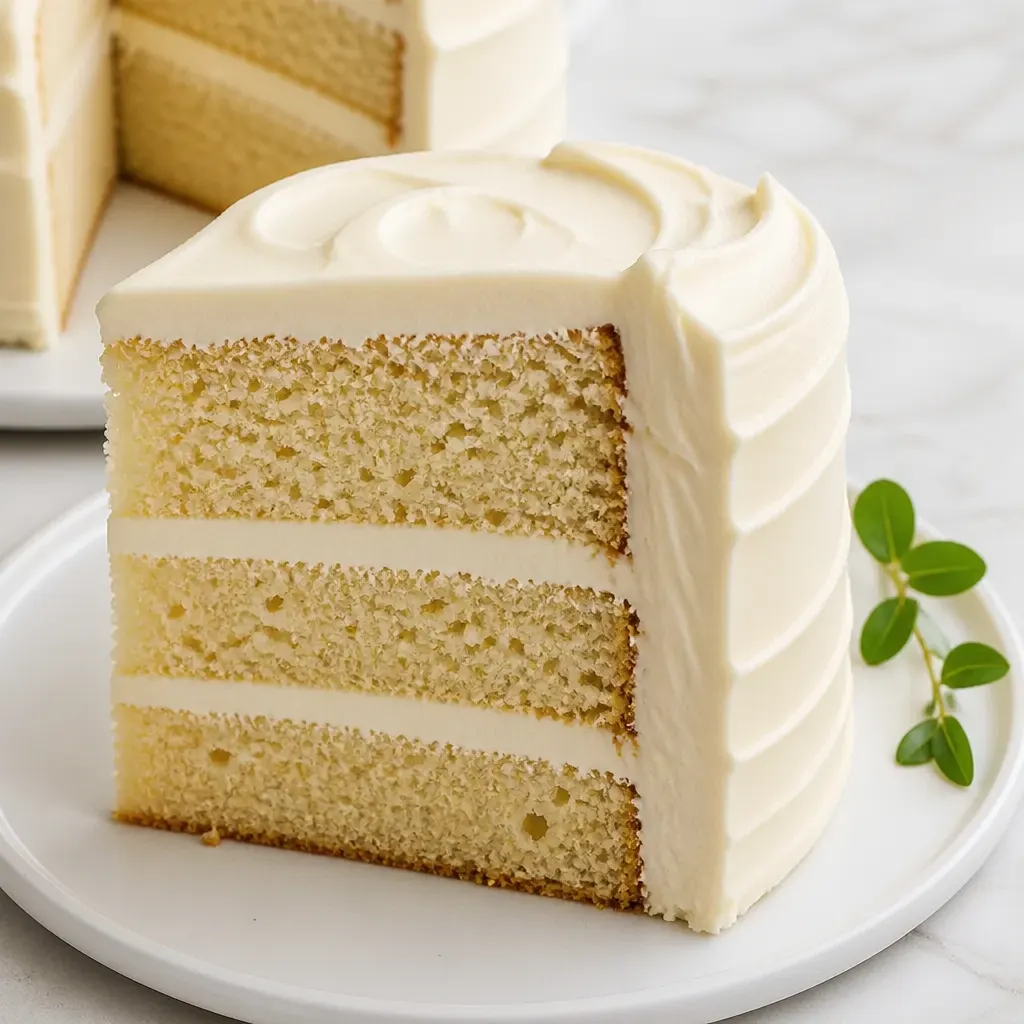
Room‑Temperature Ingredient Tips
Bringing eggs, butter, buttermilk, and sour cream to room temperature is one of the simplest steps that makes the biggest difference in texture. Room‑temp ingredients combine smoothly and trap air more predictably during creaming and mixing.
- Eggs: leave out 30–60 minutes so they don’t cool the batter.
- Butter: should be soft but not greasy or melted for proper aeration.
- Buttermilk & sour cream: take out of fridge 30 minutes so the batter doesn’t seize or separate.
Divide Batter Evenly
Even layer heights result in a balanced cake that stacks neatly. The recipe target is about 710 g per pan; weighing batter is the most accurate way to get three identical layers.
- With a scale: zero the bowl and pour batter until it reaches ~710 g, then transfer to the next pan.
- Without a scale: use a large measuring cup to scoop equal portions, or spoon batter into pans in three passes (one third each) and smooth.
Crumb‑Coat & Frosting Tips
A thin crumb coat traps loose crumbs and gives a clean foundation for your final frosting layer. Chill briefly after the crumb coat if the buttercream softens from warm layers.
- Apply a thin layer of frosting, smooth, then chill 10–20 minutes before the final coat.
- Use an offset spatula and a turntable (if available) for even sides and clean edges.
- If crumbs appear in the final coat, chill and apply a second thin skim coat before finishing.
Tips for Success
Room‑temperature ingredients: Use room‑temperature eggs, butter, buttermilk, and sour cream so the batter emulsifies easily and you avoid overmixing to combine cold streaks.
No scale? Divide by eye: If you don’t have a kitchen scale, divide batter visually into three equal mounds — use a measuring cup to portion batter into each pan for more even layers.
Frosting consistency troubleshooting: If the buttercream is too thin, add confectioners’ sugar 1/2 cup at a time; if too stiff, add whole milk 1 teaspoon at a time until spreadable.
Bake test: Check doneness at 24 minutes — look for light browning at the edges and a clean toothpick to avoid drying out the layers.
Save This Recipe
More Recipes
Frequently Asked Questions
Ready to Bake
Follow the room‑temperature and mixing steps above for consistent results, and allow the cake to set 20 minutes after assembly before slicing.
If you enjoyed this classic vanilla layer cake, check out the other desserts in the More Recipes section for inspiration.
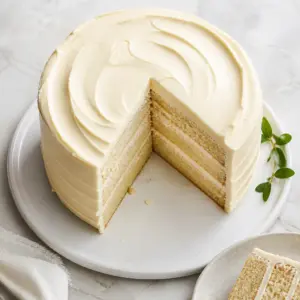
Vanilla Cake Recipe with Vanilla Buttercream (The Best!)
Equipment
- Stand mixer
- paddle attachment
- handheld electric mixer
- three 9-inch round cake pans
- parchment paper rounds
- spouted measuring cup
- wire rack
- cake stand or large plate
Ingredients
- 3 cups cake flour (450 g)
- 1 tablespoon baking powder (14 g)
- 3/4 teaspoon baking soda
- 1 teaspoon salt
- 1 cups unsalted butter (340 g) room temperature
- 2 cups granulated sugar (447 g)
- 2 tablespoons vanilla extract (28 ml)
- 1/4 teaspoon almond extract
- 4 large eggs room temperature
- 3 large egg whites room temperature, beaten until frothy
- 1 cups buttermilk (284 ml) room temperature
- 1 cup sour cream (227 g) room temperature
- 1/3 cup canola oil (67 ml)
- 2 cups unsalted butter (454 g) room temperature
- 6 cups confectioners’ sugar (741 g), sifted
- 1/4 cup whole milk (57 ml) room temperature, more as needed
- 2 tablespoons heavy cream (28 ml) room temperature
- 2 teaspoons vanilla extract
- 1/4 teaspoon salt
Instructions
- Preheat the oven to 350 degrees (F). Generously grease the bottom and sides of three 9-inch round cake pans and line with parchment paper rounds; set aside.
- In a large mixing bowl, whisk together the cake flour, baking powder, baking soda, and salt; set aside.
- In the bowl of a stand mixer fitted with the paddle attachment, or in a large bowl using a handheld electric mixer, beat the butter on medium speed until smooth and creamy, about 1 minute. Gradually add the granulated sugar and once incorporated, beat on medium-high for 2 minutes. Beat in the vanilla and almond extracts.
- Reduce the mixer speed to medium-low and add the eggs one at a time, beating well after each addition and scraping down the sides and bottom of the bowl frequently.
- Beat in the frothy egg whites in three additions, beating well after each addition and scraping down the sides and bottom of the bowl as needed.
- In a spouted measuring cup, combine the buttermilk, sour cream, and canola oil and mix until evenly combined.
- On low speed, add the flour mixture in three additions, alternating with the sour cream mixture in two additions, beginning and ending with the flour, and mix until just combined.
- Divide the batter evenly (about 710 g per pan) among the prepared pans and smooth the tops.
- Bake for 24 to 25 minutes, or until the edges are lightly brown and a toothpick inserted in the center comes out clean.
- Cool the cakes in the pans on a wire rack for 15 minutes, then invert the cake layers onto cooling racks and cool completely.
- For the frosting: in the bowl of a stand mixer fitted with the paddle attachment, or using an electric handheld mixer in a large bowl, beat the butter on medium-high speed until completely smooth, about 2 minutes.
- Reduce speed to low and gradually add the sifted confectioners’ sugar. Add the whole milk, heavy cream, vanilla, and salt and beat until combined.
- Increase the speed to high and beat for 1 to 2 minutes, or until the frosting is super fluffy. If the frosting is too thin add more confectioners’ sugar; if too thick add more milk as needed.
- Place one cake layer on a large plate or cake stand and spread a thick layer of frosting on top. Top with the next layer and repeat, finishing with the final layer, then spread all remaining frosting over the top and sides of the cake.
- Allow the assembled cake to set for 20 minutes before slicing.