
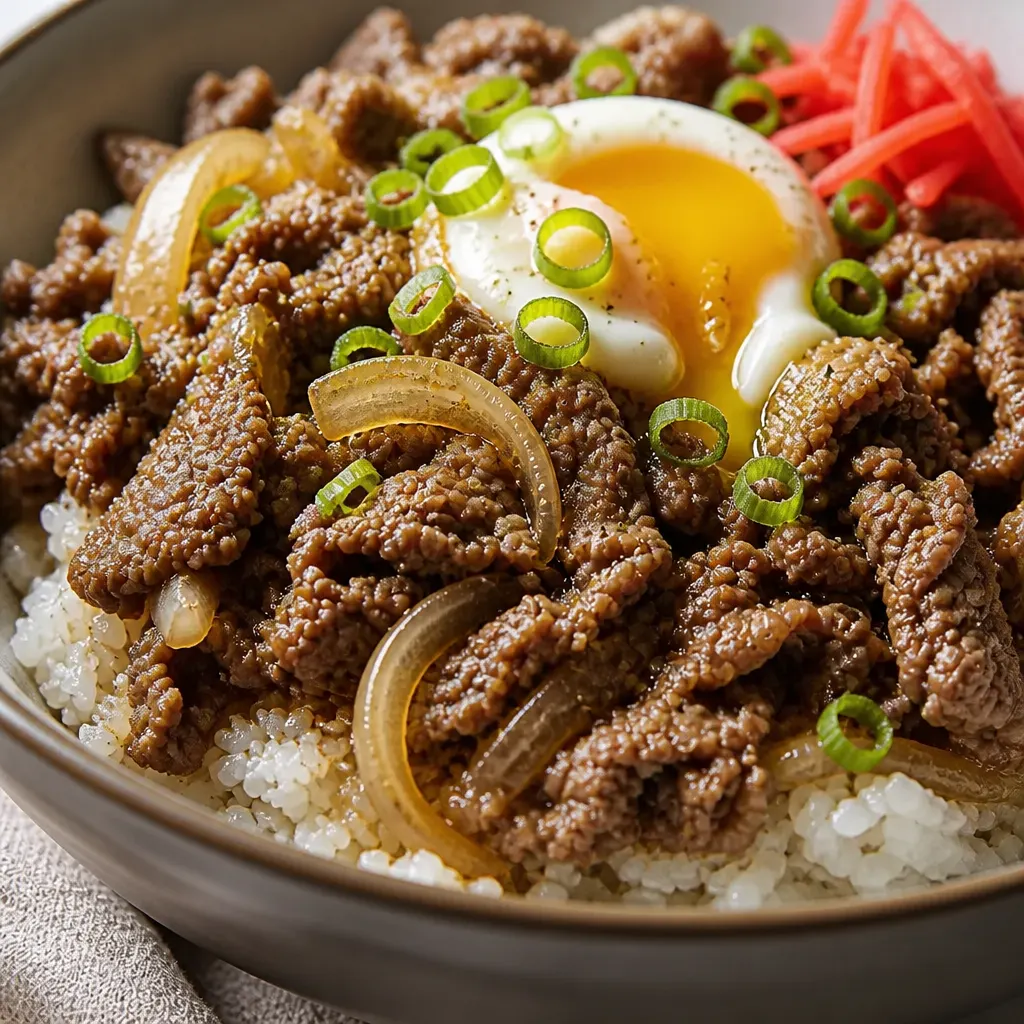
Gyudon is a glossy, umami-forward beef bowl: paper-thin slices of beef and tender, translucent onions simmered in a sweet-savory mirin–soy–dashi sauce until the flavors cling to every strand. A soft, runny egg and a sprinkle of scallions, beni-shoga, and toasted sesame make each bite rich, silky, and layered.
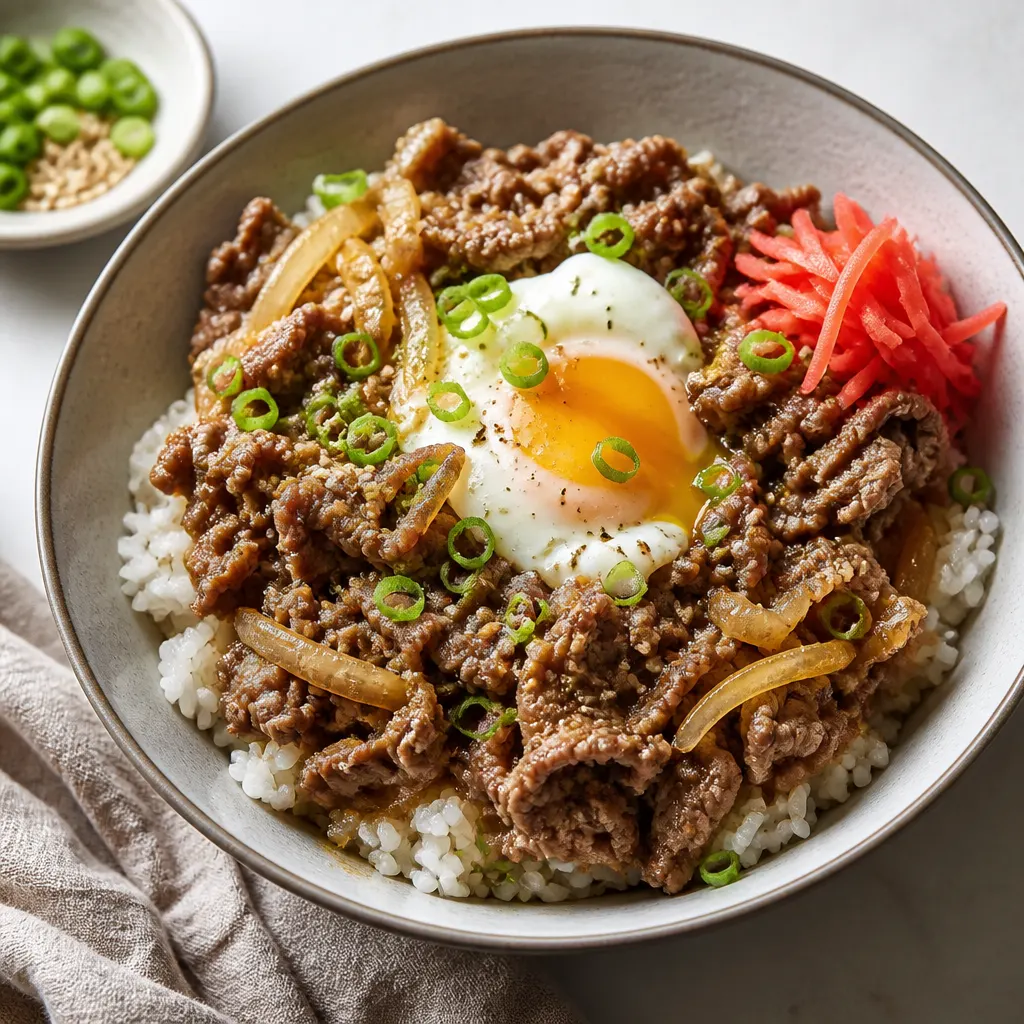
This version is ready in about 30 minutes, making it perfect for a speedy weeknight dinner or a simple weekend lunch — spoon it over hot short-grain rice and eat right away while the yolk is still silky.
Why You’ll Love This
Fast, comforting, and deeply savory — gyudon gives you restaurant-style flavor with minimal fuss. The sauce reduces quickly to a glossy finish, the beef cooks in seconds when sliced thin, and the soft egg turns the whole bowl into a silky, satisfying meal.
For another fast stovetop main with big flavor, try the Quick Stovetop Sloppy Joe Recipe when you want a different weeknight switch-up.
Ingredients You’ll Need
How to Make Gyudon
- Prep the beef: If your beef is not pre-sliced very thin, lay it flat, wrap in plastic, and place in the freezer for 20–30 minutes until slightly firm. Slice very thinly across the grain — thinner slices will cook in seconds and stay tender.
- Cook the onions: Heat 1 tablespoon vegetable or olive oil in a large skillet over medium heat. Add the 1 large thinly sliced onion and sauté until softened and translucent, about 5–7 minutes.
- Make and simmer the sauce: In a small bowl or measuring cup, stir together 1 1/2 teaspoons sugar, 2 tablespoons mirin, 1 1/2 tablespoons soy sauce, and 1 cup dashi or beef stock. Pour the mixture into the skillet with the onions and bring to a gentle simmer.
- Add the beef and finish: Add the very thinly sliced beef to the skillet in a single layer or small batches. Stir and cook briefly — about 1–2 minutes — until the beef is just cooked through and the sauce clings to the meat and onions. Do not overcook; the beef should remain tender.
- Prepare the eggs: Meanwhile, bring a small saucepan of water to a gentle simmer. For soft-poached eggs, create a gentle whirlpool and slip eggs into simmering water, cooking about 3 minutes for runny yolks; for soft-boiled eggs, simmer 6 minutes in boiling water and cool briefly in ice water before peeling.
- Assemble bowls: Divide 4 cups cooked short-grain rice among 4 bowls, mound the beef and onion mixture over the rice, top each bowl with a soft-poached or soft-boiled egg, and garnish with chopped scallions, beni-shoga, and toasted sesame seeds as desired.
Slice Beef Ultra-Thin
The defining technique for gyudon is ultra-thin beef. Partially freezing the meat for 20–30 minutes firms it up so you can slice paper-thin pieces cleanly; always slice across the grain for tenderness.
- Wrap the beef tightly before chilling so it doesn’t dry out.
- Use a sharp chef’s or slicing knife and slice about 1–2 mm thick if possible.
- If you can’t slice thin enough, ask your butcher for thinly sliced gyudon cut.
Balance the Sauce
Gyudon’s sauce is a quick balance of sweet (sugar and mirin) and salty/umami (soy and dashi). Taste as it simmers and adjust in small increments — a splash more mirin for brightness or a pinch more sugar if you prefer sweeter bowls.
- Bring the sauce to a gentle simmer and let it reduce briefly so it coats the beef.
- If using beef stock instead of dashi, consider a small splash of fish sauce or a pinch of instant dashi powder for extra umami.
- Finish by simmering only long enough for flavors to meld; prolonged reduction can over-salt the dish.
Perfect Soft-Poached Eggs
A soft-poached or soft-boiled egg with a runny yolk is traditional — the yolk enriches the sauce and rice. Use gentle heat and avoid vigorous boiling to keep whites tender.
- Poach in simmering (not rolling) water for about 3 minutes for runny yolks.
- For soft-boiled eggs: boil 6 minutes, then shock in ice water before peeling.
- Add a splash of vinegar to the poaching water to help whites hold their shape.
Quick Tips
Partial-freeze for cleaner slices: Chilling the beef until slightly firm makes it much easier to cut very thin slices; use a sharp knife and slice across the grain to keep meat tender.
Choose dashi when possible: Dashi adds an authentic umami backbone; if you only have beef stock, it works but the flavor will lean richer rather than traditionally savory.
Watch the beef closely: Very thin slices cook in 1–2 minutes — remove from heat as soon as the color changes to avoid dryness.
Reheat smartly: Store sauce and beef in the fridge separately from rice; reheat the beef gently in a skillet with a splash of water or stock, and warm rice in the microwave or steamed briefly.
Save This Recipe

More recipes
Frequently Asked Questions
Final Thoughts
Gyudon is a fast, deeply satisfying bowl that hinges on one technique — slicing the beef very thin. Once you master that step and balance the mirin–soy–dashi sauce, this becomes a go-to for quick, comforting dinners.
Serve bowls hot with a soft egg and your favorite garnishes; the contrast of silky yolk, bright beni-shoga, and nutty sesame is what makes gyudon so irresistible.
Gyudon Recipe
Equipment
- large skillet
- small saucepan
- bowls
Ingredients
- 1 tablespoon oil vegetable or olive oil
- 1 large onion thinly sliced
- 1 pound beef chuck or rib eye, very thinly sliced
- 1 1/2 teaspoons sugar
- 2 tablespoons mirin
- 1 1/2 tablespoons soy sauce
- 1 cup dashi or beef stock
- 4 large eggs
- 4 cups rice cooked short-grain
- scallions chopped (for garnish)
- beni-shoga shredded pickled ginger, for serving
- toasted sesame seeds for garnish (optional)
Instructions
- Slice the beef very thinly across the grain if not already sliced; partially freezing the beef for 20–30 minutes makes this easier.
- Heat 1 tablespoon vegetable or olive oil in a large skillet over medium heat and add the 1 large onion (thinly sliced); cook until the onion is softened and translucent.
- Stir together 1 1/2 teaspoons sugar, 2 tablespoons mirin, 1 1/2 tablespoons soy sauce, and 1 cup dashi or beef stock, then pour the mixture into the skillet with the onions and bring to a gentle simmer.
- Add the thinly sliced beef to the skillet and cook briefly, stirring, until the beef is just cooked through and the sauce clings to the meat and onions.
- Meanwhile, bring a small saucepan of water to a gentle simmer and poach the 4 large eggs to your preferred doneness, or prepare eggs however you like for topping.
- Divide 4 cups cooked short-grain rice among 4 bowls, mound the beef and onion mixture over the rice, top each bowl with a poached egg, and garnish with chopped scallions, beni-shoga (shredded pickled ginger), and toasted sesame seeds as desired.